— John 3:1-8 —
There was a man named Nicodemus, who was a Pharisee, a respected teacher, a man who had achieved success in religion and reputation. And yet, something drove him into the quiet shadows to seek Jesus. Perhaps he didn’t want others to see. Perhaps he feared being misunderstood. Or maybe, the darkness outside reflected the uncertainty within his own heart.
Nicodemus’ words sounded respectful: “Rabbi, we know that you are a teacher who has come from God. For no one could perform the signs you are doing if God were not with him” (v2). But beneath the polite greeting was a restless heart searching for something deeper.
Coming to God in the Quiet
How often do we find ourselves in Nicodemus’s shoes? We may hold the right titles, jobs, or even a “good Christian” image. People may look at us and assume we have it all together. But in the quiet hours of night, when there are no crowds to impress, our souls whisper questions we can’t tell anyone else because they are too fragile to say out loud.
Sometimes, if we’re honest, it’s not just fear that keeps us hidden—it’s pride.
We don’t want others to see that we don’t have it all together. We’re ashamed to admit we need help. We don’t want anyone, not even God, to see the cracks in our carefully constructed life.
And yet, those hidden hours often reveal the truth: all of us, no matter how strong or accomplished we appear, are needy souls desperate for God’s presence.
But here’s the beauty of Nicodemus’ story: Jesus didn’t shame him for coming under cover of darkness. He didn’t turn him away. Instead, He welcomed his curiosity and began to open his heart to something far greater than his questions: the need to be born again.
That same invitation is extended to us. Whether we come to Jesus with curiosity, confusion, fear, or even pride, He meets us right where we are. He doesn’t wait for us to show up with polished faith or perfect words. He simply asks us to come.
From Curiosity to Transformation
Jesus did not waste time with small talk. Instead, He spoke directly to the heart of the matter:
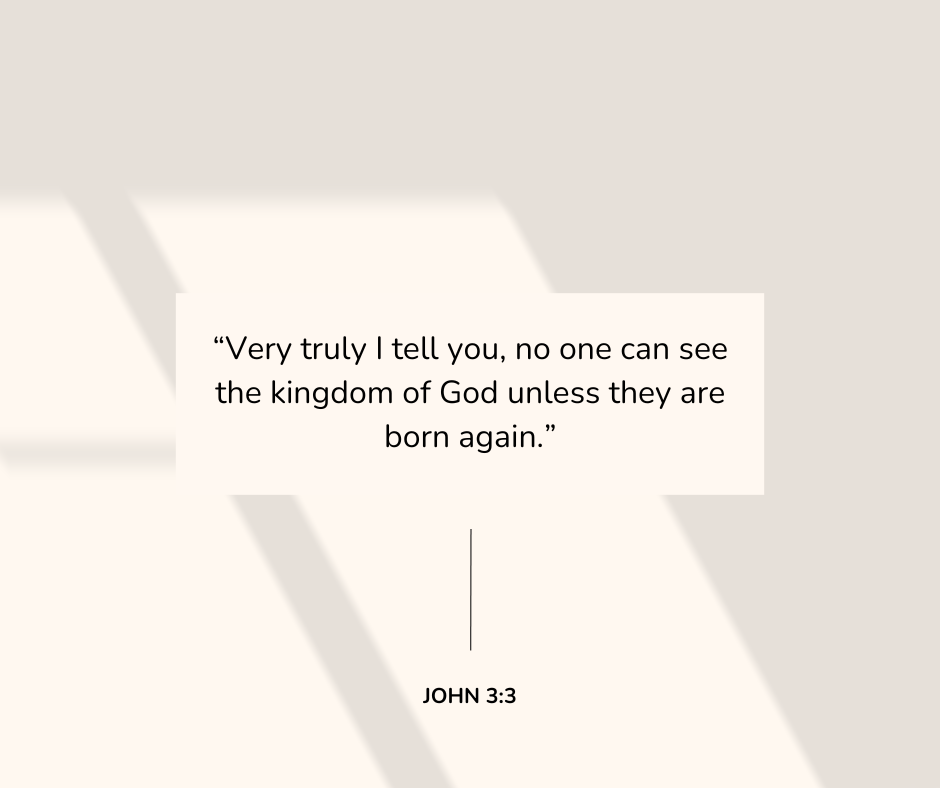
Nicodemus couldn’t make sense of it. How can someone be born a second time? But Jesus wasn’t talking about biology—He was speaking of a birth “from above,” a transformation only the Spirit can bring.
We know what it feels like to long for a reset. A new year, a new planner, a new habit. We can change routines, break bad patterns, even clean up our outward behavior. But deep down, we find the same fears, the same pride, the same sins resurfacing.
What we need is not self-improvement, but rebirth. We don’t need to polish what is broken; we need to be made new.
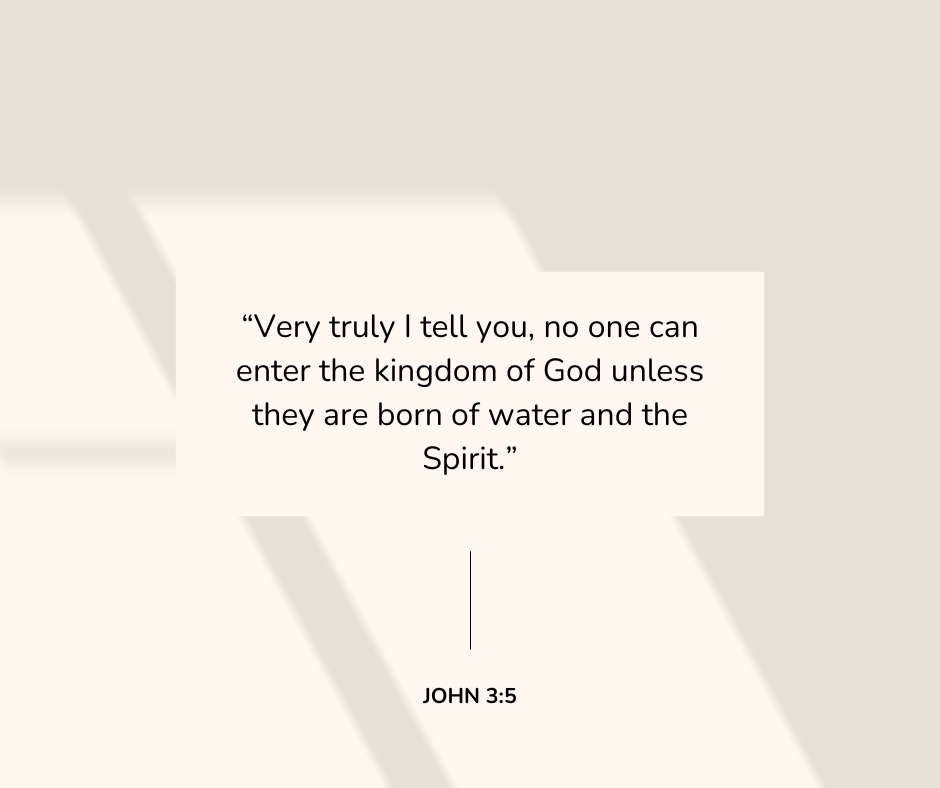
Flesh vs. Spirit
Jesus explains: “Flesh gives birth to flesh, but the Spirit gives birth to spirit” (v6). Just as our first birth brings us into the physical world, a second birth—through the Spirit—brings us into the life of God’s kingdom. This is not something we can manufacture by effort, education, or morality. It is God’s work, His gift of grace that changes us from the inside out.
Like the Wind
To help Nicodemus understand, Jesus used the image of the wind: “The wind blows wherever it pleases. You hear its sound, but you cannot tell where it comes from or where it is going. So it is with everyone born of the Spirit” (v8). In the same way, the Spirit’s work is mysterious yet undeniable. You can’t always explain it, but you can see the evidence in a transformed life—new desires, new perspective, new hope.
What Spiritual Rebirth Really Means
Rebirth is not just a reset or a do-over. It’s not simply cleaning up mistakes or trying harder. It’s stepping into a brand-new identity—one rooted in God’s grace. Just as birth is something you cannot control or plan for yourself, spiritual rebirth is something you can only receive.
- It means moving from emptiness to fullness.
- From trying to earn God’s love to resting in it.
- From living in the shadows to walking in the light.
It’s like starting fresh after a long, difficult season.
Maybe you’ve carried guilt from past choices, or maybe you’ve been striving endlessly for validation in your career, relationships, or even your faith community. You can achieve much and still feel the hollowness Nicodemus felt.
But when you surrender to Christ, His Spirit breathes new life into you. Like spring breaking through winter, you find color where there was once gray, warmth where there was once coldness, hope where there was once despair.
You should not be surprised at my saying, ‘You must be born again.’
John 3:7
Being born again isn’t about a second chance to improve ourselves; it’s about receiving a new life altogether. It’s letting God breathe His Spirit into places where we were once spiritually dead. It’s more than turning over a new leaf—it’s receiving a new heart. Letting Him reshape our desires and set us free from cycles we could never break on our own.
Spiritual rebirth is God’s work, not ours. Our part is to surrender and receive it.
Nicodemus reminds us that curiosity is not enough. Wondering about Jesus, admiring Him, or even respecting His teaching will never be enough. We need the transformation that only comes from being born of the Spirit.
For Your Quiet Hours
Whenever the questions rise—whether in the stillness of the night or in the ordinary routines of your day—don’t be afraid of the quiet. Don’t be afraid of what others might think. Bring your restlessness, pride, or fear to Jesus. He will meet you there, and He won’t leave you as you are. He will lead you from curiosity to transformation.
To be born again is to let the Spirit of God create something entirely new in you, a life that reflects His kingdom here and now.
Reflection Questions:
- What questions or hidden struggles do you find yourself bringing to God in the quiet?
- In what ways do you sometimes settle for “self-improvement” instead of true transformation?
- Where do you see the Spirit’s quiet but undeniable work in your life?
- How might surrender look for you this week, letting the Spirit reshape your desires instead of relying on your own strength?
